
Joshua Nakazawa – Your Practice Coach
Enroll NowMy Story
“For every one day that I don’t practice, I get set back a week in progress.”
That line—repeated by several of my teachers and echoed by my mother—used to replay nightmarishly in my mind as a kid, scaring me into practicing almost every day. I began playing cello at the age of 4, and like many children with supportive parents, I grew up in the Boston training ground of youth symphonies and pre-college programs: Saturdays at New England Conservatory, Sundays at Boston University for BYSO, and some years at Longy School of Music.
By junior year of high school, I became determined to make cello my career. I practiced harder and trained harder with my coaches for conservatory auditions. During those years I competed in the Boston Symphony Orchestra Concerto Competition (placing runner-up),and performed on the radio show “From the Top,” playing Shostakovich. I received scholarships from New England Conservatory and Manhattan School of Music.
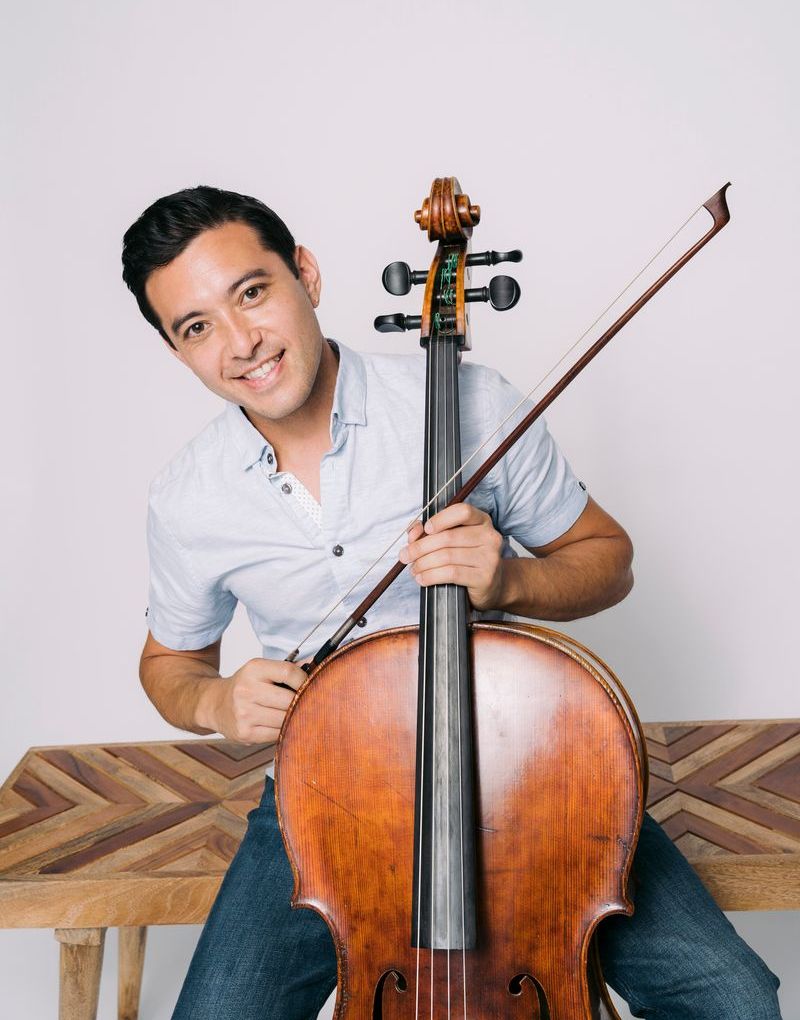
College was eye-opening. I could no longer ride on raw childhood talent. I had holes in my technique to fill and important concepts to deploy in order to achieve consistency and control over meaningful phrasing. Across my training at Manhattan School of Music, Southern Methodist University, and the Glenn Gould School, I became ready to take professional orchestral auditions—three screened rounds, sometimes up to 200 candidates for a single position.
Audition after audition, I would maybe pass the first round, maybe make it to finals, and sometimes never advance at all. The truth was simple: I still needed to hone my consistency under pressure.
Meanwhile, the dream of winning an orchestra job was waning with each failed attempt—but I needed to work to pay for my expensive audition-taking habit. Between flights, lodging, and buying a seat for my cello, it added up quickly. With my education fresh in my mind, I took the Massachusetts Teacher’s Education Licensure exam and began working as a part-time string instructor in Newton, Massachusetts. Teaching in public schools taught me a lot about curriculum, pedagogy, and what actually helps beginners succeed.
At the same time, I built a private studio—eventually teaching around 50 weekly students—while practicing audition excerpts late into the night (often 8:00pm–11:30pm), still determined to win an orchestra job.
Finally, it started happening. I began winning jobs consistently. I had unlocked the code—the “secret sauce.” It wasn’t just working harder. It was having the right fundamentals installed, in the right order, trained the right way, with the right consistency.
After falling in love with the culture, the land, the sea, and all the beauty Hawai‘i has to offer, I settled in Honolulu, becoming a tenured member of the Hawai‘i Symphony Orchestra. From there, I built not only an orchestral career, but a chamber music career, a music business, and other incredible experiences collaborating with world-class artists—while always making time to serve my community through private lessons and group classes. My time here led me down a path to create a more efficient way of teaching- one that would excel students in the early learning phases.
I built The Cello Accelerator Course for the student I used to be: motivated, capable, working hard—yet missing a clear system that makes progress predictable.
The training philosophy lines up with what learning science repeatedly shows:
- Consistency beats cramming. Distributed practice (spacing learning out across days) improves learning and retention compared to massed “all-at-once” practice.
- The right kind of difficulty creates durable skill. Practice structures that introduce “desirable difficulty” (like well-designed variation) can improve retention and transfer in motor learning.
- Habits reduce the willpower tax. Repeating a behavior daily in a stable context is a proven pathway to automaticity—meaning it becomes easier to stay consistent over time.
In other words: this course isn’t “practice more.” It’s practice smarter, with a system designed to instill fundamentals early, so you’re not forced to rebuild them years later under high pressure.
What Makes This Course Different
Weekly lessons can be amazing—and also strangely paralyzing.
You walk out your lesson with a ton of insight—posture, bow path, shifting, tone, rhythm, tension—but it’s all mixed together. You know what’s wrong, but you’re left wondering: What do I work on first? What do I do today? What order actually gets results?
And those unanswered questions are often the real reason practice doesn’t even start.
So here’s the idea that changed everything for me:
What if a weekly lesson was broken down into daily lessons? What if each core skill was trained consistently—one day at a time—in the right sequence, so your progress stops depending on motivation and starts depending on a plan?
That’s exactly what The Cello Accelerator Course does. I took the core skillsets hidden inside great teaching and great exercises, extracted them, and organized them into a clear day-by-day system—so you always know what to practice, how to practice it, and what comes next.
Why Daily (or Consistent) Practice Works – The Science
Daily practice is powerful for skill acquisition because repeated training strengthens the neural pathways involved in a skill, reduces cognitive load over time (automaticity), and—when spread out—improves long-term retention more than cramming. Below is a science-backed breakdown you can explore further through the linked sources.
2. Why “every day” (or consistent) matters
- Spaced repetition vs. cramming: Spreading practice out over time improves retention and skill mastery compared to doing the same amount in one long session.
- Combating decay: Skills degrade if they are not revisited—especially new motor patterns. Consistent contact prevents backsliding.
- Habit formation: Daily practice reduces resistance because the behavior becomes part of your routine rather than a recurring decision.
3. Key scientific nuances (the part most musicians miss)
- Quality > quantity: Focused, deliberate practice matters as much as the number of hours.
- Slight variability can accelerate learning: Small changes in how you repeat a task may help motor learning more than perfectly identical repetition.
- Structure beats willpower: A clear plan lowers the friction to begin, which makes consistency easier to maintain.
Summary
You don’t need eight-hour days. What works is regular, focused, well-structured practice that builds fundamentals in the right order, reinforced through spaced repetition and smart variation. That is the learning method The Cello Accelerator Course is built around.
Reader Resources (Science-Backed Links)
- KQED MindShift: Why effective practice is just as important as the hours of practice — https://www.kqed.org/mindshift/48280/why-effective-practice-is-just-as-important-as-the-hours-of-practice
- Haith & Krakauer (2018): The multiple effects of practice: skill, habit and reduced cognitive load (PMC) — https://pmc.ncbi.nlm.nih.gov/articles/PMC6443249/
- org: Impact of learning skills (general overview) — https://sociology.org/impact-of-learning-skills/
- Johns Hopkins Hub: To master skills faster, tweak your practice routine (practice variability) — https://hub.jhu.edu/2016/01/28/learning-new-skills-fast/